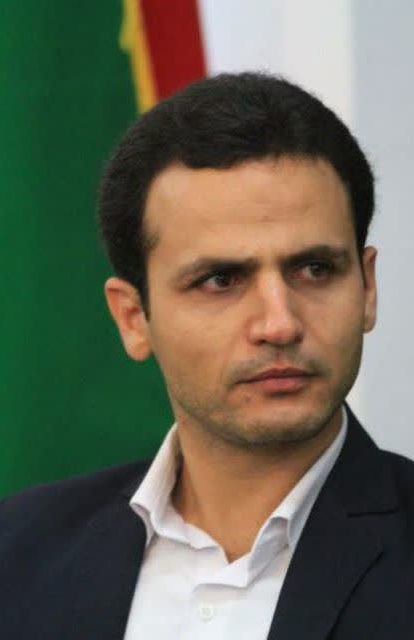
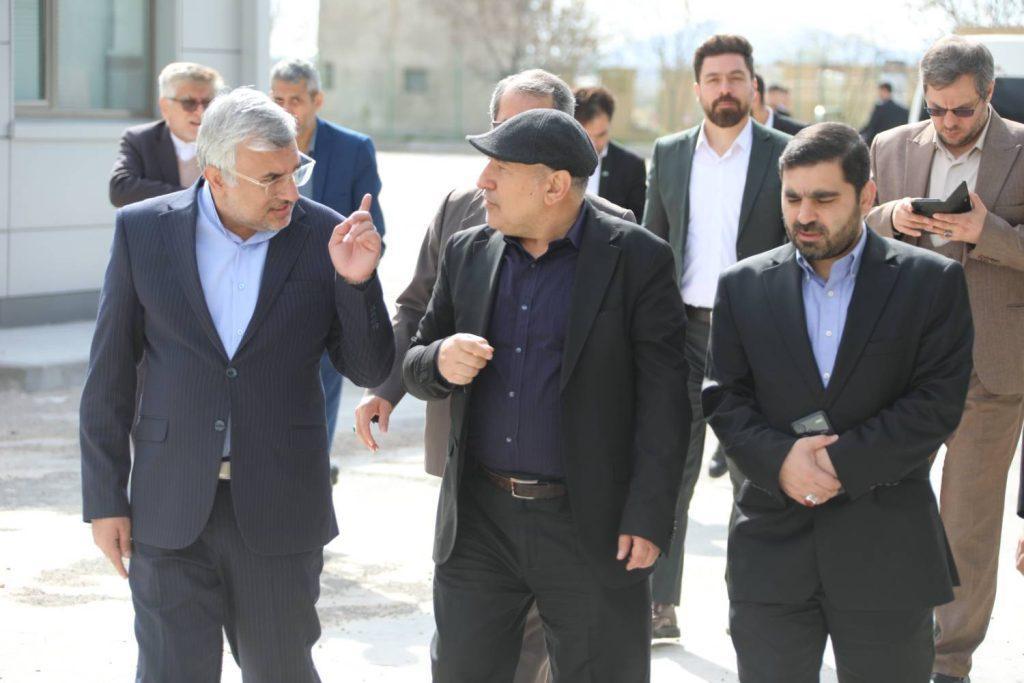
Hamid Ghanbari, Deputy Minister of Economic Diplomacy at the Ministry of Foreign Affairs, accompanied by Hossein Garousi, CEO of the Maku Free Trade Zone Organization, visited trade corridors, transit infrastructures, and various sections of the Bazargan border and its border terminal.
According to a report from the Maku Free Trade Zone News Agency, during this visit, the delegation conducted an on-site inspection of different parts of the Bazargan border, closely examining the flow of trucks, trailers, and passengers. They evaluated the challenges and bottlenecks present in the processes of commercial and passenger transit.
This field visit was conducted with the aim of assessing the status of commercial and passenger traffic and identifying solutions to facilitate and streamline transit at one of the country’s most important commercial gateways.
Subsequently, the Deputy Minister of Economic Diplomacy and his delegation visited the newly constructed Maku-Qilishlanmish corridor, the newly built Abrishim Road, the development zone of the Maku Free Trade Zone, and the Iran-Turkey Trade Exchange Center. They were briefed on the latest executive status and capacities of these projects.
Speaking on the sidelines of the visit, Ghanbari emphasized the necessity of synergy between economic diplomacy and the development of border infrastructure. He stated, “Bazargan border and the Maku Free Trade Zone play a decisive role in connecting Iran’s economy to regional and European markets. Removing transit barriers at this border will have a direct impact on increasing the country’s trade exchanges.”
Hossein Garousi, CEO of the Maku Free Trade Zone Organization, referring to the developmental actions taken, stated: “Improving access routes, expanding economic zones, and launching the Iran-Turkey Trade Exchange Center are among the Maku Free Trade Zone’s programs aimed at increasing transit capacity and enhancing the status of the Bazargan border within international corridors.”
At the conclusion of this visit, emphasis was placed on the urgency of accelerating the completion of infrastructural projects, strengthening coordination among executive agencies stationed at the border, and leveraging the capacities of economic diplomacy to support the activities of the Maku Free Trade Zone.